Sunday, April 23, 2023

Elitism-Pharisees

Most parallels between the ancient types of idolatry and their modern counterparts are not difficult to see. There is one parallel, however, that may require greater discernment on the part of the reader. Anciently, this condition of idolatry, elitism, immediately preceded the destruction of the Lord’s wicked people, the Lord delivering only a remnant. If the scriptural type holds true, then, the recurrence of this ancient form of idolatry will signal the same result at that time.

Conversely, when the calamities of the last days appear at the door, that will be because this and other forms of apostasy have grown prevalent among us. For in the last days all types come together, whether for good, as in the restoration of keys and blessings of former dispensations, or for evil, as in the idolatry of Israel (which in these latter days, is us, Ephraimite Gentiles) that precipitates the great and dreadful day of the Lord. 

Concerning this scriptural type of idolatry, I first wish to remind the reader that its existence cannot, nor ever will, constitute grounds for our growing disaffection with people of the Church. The great paradox, the test the Saints endure in our day, surely consists of remaining true, while all around people indulge in idolatry. Brother Hugh Nibley serves us as an inspiring example of such faithfulness. Although he recognizes both the great good and the many evils in the Church, he stands aloof from all disaffection. He scrupulously maintains the fine line between discontent—often voiced openly to inspire us to higher things—and malcontent. From him, malcontent, a sure path to apostasy, receives not so much as a whisper. 

Still, we cannot ignore certain parallels, even though they might be painful to us. We then would not learn our lesson but would be examples of the very folly about which the scriptures teach. Seeing this parallel surely must not cause us to point the finger at others. Rather, it should help us take the attitude, “Let him who is without sin cast the first stone” (compare John 8:7). 

Especially where aberrations exist within a people’s leadership, whether political or religious, we should remember that such tend to be symptomatic of the general condition: our leadership reflects what we ourselves are, both at our best and at our worst. 

Those who blame the Church’s leaders for various problems, therefore, put the cart before the horse. Problems begin at the grassroots level and work their way up. Although they may then manifest themselves on higher levels, to the chagrin of the people who spawned them, that does not mean a people’s leaders alone are at fault or even that all leaders are implicated. It does mean that society as a whole suffers the effects of a people’s unrighteousness, and such unrighteousness in this case includes idolatry.

I call this form of idolatry Elitism–Pharisaism because it simultaneously partakes of social pride and hypocrisy. It constitutes idolatry because it puts the institution or peer group before the individual: a person serves the corporate entity, not vice versa. 

It involves worship, in effect, of the system or organization to which people belong and thus is a kind of self-worship. Typifying this sort of idolatry are the Pharisees of the New Testament period, a group whose elitist tendencies we know well from Jesus’ discourses with them. 

Book of Mormon examples of the same sort of idolatry include the priests of King Noah and the Zoramites (Mosiah 11:1–12:37; Alma 31:1–32:5). Just as none of these groups represented the entire leadership of the people in their times, so modern Pharisees will not represent all Church leaders. 

Pharisaic persons display a form of godliness that lacks the power thereof (2 Tim. 3:5). 

They harbor a presumptuousness about being a chosen and elect people (Luke 3:8). 

They consider others even their humble brethren, a lost and fallen people, worthy to be despised as lesser mortals (John 7:47–52). 

A paradoxical aspect of the elitist-Pharisaic phenomenon is that its pastors and teachers do in fact possess authority to teach and instruct. The biblical type shows that the Lord requires that his people obey them (Matt. 23:1–3). In reality, however, they have taken away the key of knowledge and shut up the kingdom, neither entering it themselves nor letting others enter (Matt. 23:13; Luke 11:52). 

As a result, they cannot answer difficult religious questions nor recognize the signs of the times, or that which has been prophesied (Matt. 16:2–3; 22:46). 

They are blind leaders of the blind, yet they assume they see things aright (Matt. 15:14; John 9:41). 

They confuse their priorities and what is real (Matt. 23:16–24; Luke 11:42). 

They cancel the good effect the word of God has in people’s lives, overruling individual expressions of devotion with manmade conventions (Matt. 15:3; Mark 7:13). 

Yet, observant in their religion and esteemed by men, they consider themselves righteous by their own standards (Luke 16:15; 18:11–12). 

But their religion consists only of what appears in public (Matt. 23:5). 

Their private words and thoughts tell another story (Luke 12:1–3). 

Outwardly they appear righteous, but inwardly they raven as wolves; they yield to wickedness, oppression, excesses (Matt. 23:25–28; Luke 11:39). 

Though they believe in Christ, they care more for people’s praise than for God’s (John 5:44; 12:42–43). Like leaven in bread, hypocrisy permeates their establishment (Luke 12:1). Their hypocrisy, likewise, inspires their communal prayers (Matt. 23:14). 

They love for others to call them by ecclesiastical titles, to greet them publicly and hold them in admiration (Matt. 23:7; Luke 11:43). In token of reserved seats in the kingdom of heaven, they take the foremost places at meetinghouses and banquets (Matt. 23:6; Luke 14:7–8). Yet quickly they find fault with those not conforming to their exterior of worship (Mark 2:18, 24; 7:2, 5; Luke 6:7). 

While they themselves covet the things of the world, they despise those who mingle with sinners in attempting to rescue them (Matt. 9:11; Luke 7:33–34; 16:14). 

Their fear of political repercussions outweighs their love of spiritual obligation (John 11:47–48). 

In the end, they disfellowship those who love and confess Christ (John 9:22; 12:42). The converts to their form of religion, whom they go to great lengths to gain, they make twofold more children of hell than themselves (Matt. 23:15): so much hypocrisy governs their lives that it appears incurable (Matt. 23:29–33). 

To assure themselves that their religion is well founded, the elitist-Pharisaic faction makes frequent mention of a key prophet or forebear on whom they base their authority. So far have they departed from the prophet’s message, however, that if some came among them who taught as he did, they would seek to kill them, as did their forefathers (Matt. 23:30–34; Luke 11:47–49). 

Were their acclaimed prophet to confront them, he would be the first to assert that neither God’s love nor God’s word abides in them (John 5:38, 42, 45). Thus, the most righteous among them—one like their acclaimed prophet—they call a deceiver and make a scapegoat (Matt. 27:63; John 11:50). At that point, the Lord removes the kingdom from them, giving it to a people who will bring forth its fruit (Matt. 21:43). 

In summing up this somber biblical type, we see among the ancient elitist Pharisees many forms of priestcraft that Jesus and his Apostles predicted would also corrupt the church of the last days. Indeed, the things they prophesied that would befall us repeat the Pharisaic phenomenon as nearly as any scriptural type. Just as the love of the ancient elitist Pharisees had waxed cold because of iniquity among them, so will the love of many in the last days wax cold because of iniquity (Matt. 24:12). 

As they loved themselves and were covetous and treacherous, so will many in the last days (2 Tim. 3:1–4). As they were ever learning but never coming to a knowledge of the truth, so will many in the last days (2 Tim. 3:7). 

As they admired men for personal advantage, so will many in the last days (Jude 16). 

As they failed to believe that enemies would invade and destroy their land because of their iniquity, so will many in the last days be willingly ignorant of their role in precipitating a fiery destruction of the wicked (2 Pet. 3:3–10). 

By their idolatry and hypocrisy, they will pollute the church of God, bringing upon themselves God’s judgment (Morm. 8:34–38). As a consequence, just as messianic imposters from among the Jews preceded Jesus’ first coming (Acts 5:36–37)97—with the notable exception of John the Baptist—so false christs and prophets will precede his second coming (Matt. 24:5, 11, 23–24; Mark 13:6, 21–22). 

The true prophets will nonetheless withstand, as the false prophets withstood Moses (2 Tim. 3:8–9) and as the Pharisees withstood Jesus. The righteous among them they will hate and betray (Matt. 24:9–10; Mark 13:12–13), as the Jews hated and betrayed Jesus and his disciples to ecclesiastical and political authorities. 

Many they will deliver to councils to be judged and punished for their testimonies, smiting some and killing them unlawfully (Matt. 24:9, 49; Mark 13:9)—even as they delivered Jesus and his disciples to be persecuted and killed by ecclesiastical and political authorities. 

In the day of judgment that will then be upon them, they will suffer the fate of all hypocrites. Cutting them off from his people, the Lord will cast them into outer darkness, where there is weeping and gnashing of teeth.

Saturday, April 8, 2023

What Do You Teach


When you teach do you:


a. Teach a lesson?

b. Cover material? or

c. Do you teach people?


If you teach people do you:


a. Have class members read excerpts from the lesson material?

b. Teach what others have taught on the subject?

c. Give your own ideas and opinions?

d. Ask for the ideas and opinions of class members? or

e. Do you teach the word of God?


If you teach the word of God, do you:


a. Teach from the scriptures?

b. Teach what someone else says about the scriptures?

c. Teach what you believe the scriptures say? or

d. Do you teach what the Lord has, after receiving His word, revealed to you?


As you contemplate these questions think about these quotes from Alma:


"For because of the word which he has imparted unto me, behold, many have been born of God, and have tasted as I have tasted, and have seen eye to eye as I have seen; therefore they do know of these things of which I have spoken, as I do know, and the knowledge which I have is of God" (Alma 36:26 emphasis added).


"Do ye not suppose that I know these things myself? Behold I testify unto you that I do know these things whereof I have spoken are true. And how do ye suppose that I know of their surety? Behold, I say unto you they are made known unto me by the Holy Spirit of God. Behold, I have fasted and prayed many days that I might know of these things of myself. And now I do know of myself that they are true; for the Lord God hath made them manifest unto me by his Holy Spirit, and this is the spirit of revelation which is in me" (Alma 5:45-46 emphasis added).


What did Alma teach? What had been revealed to him, and even though what he received had been revealed to many before him, what he knew and taught was given him of God. 


When God's words become our words because they have been revealed to us, then, and only then, will we become witnesses with first-hand knowledge and can testify that we know


Otherwise whatever we teach is just information, is hearsay, and we are just echoes. 


Also consider what Joseph said:


"Search the scriptures--search the revelations which we publish, and ask your Heavenly Father, in the name of His Son Jesus Christ, to manifest the truth unto you, and if you do it with an eye single to His glory nothing doubting, He will answer you by the power of His Holy Spirit. 


You will then know for yourselves and not for anotherYou will not then be dependent on man for the knowledge of God; nor will there be any room for speculation. No, for when men receive instruction from Him who made them, they will know how he will save them


Then again we say: Search the Scriptures, search the Prophets and learn what portion belongs to you" (Joseph Smith, Teachings of the Prophet Joseph Smith, selected and arranged by Joseph Fielding Smith, page 11 emphasis added).


Too often we limit ourselves by reading, by trying to understand, by studying, memorizing, by pondering, by feasting, or even by searching. And while we may know what others have said and can quote them, we stop short of receiving the revelation directly from our Father in Heaven, and therefore do not have the Spirit of Revelation and Spirit of Prophecy, and we just teach information. Otherwise we would teach with power and authority (Alma 5:45--47; Alma 17:24; Isaiah 28:9).


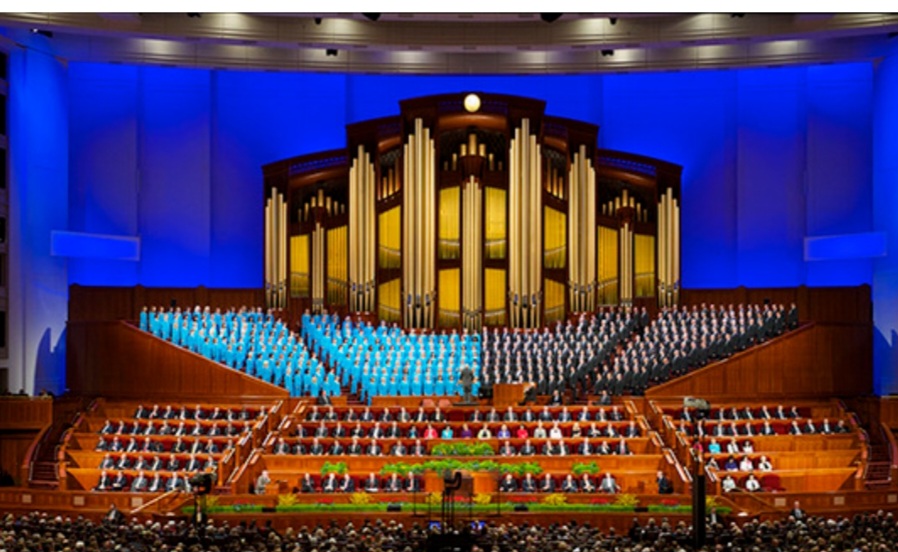
If we screened and auditioned teachers like we do with applicants for the Tabernacle Choir, perhaps we would find teachers who had actually obtained the word of God, who taught with the Spirit of Revelation and the Spirit of Prophecy. 


But that would require that those doing the screening would recognize the Spirit of Revelation and the Spirit of Prophecy, and who knew the difference between ecclesiastical authority and those who have His Spirit and His word, yea, who teach with the power of God unto the convincing of men.


Correct answers: c, e and d.


Teaching in the Savior's Way


Sunday, March 26, 2023

What Would it Take

What would it take to convince you that there is a God and that He has revealed himself and His truth through His words? Is there absolute proof?  


I have thought a lot about what it would take to convince me, and I have concluded that it would depend on me. What I mean by this is that unless I was someone who was seeking for something, either knowledge, truth or some type of validation about my life, no matter what was available it would be meaningless without some desire on my part to want to know it. Without this desire no matter what truth and knowledge was out there, I would probably not seek it. 


First what would not help me:


Stories about believers, famous or otherwise, 


History of believers, good or bad,


Believers' testimonies, and by this I mean people's beliefs. To me belief or non-belief is irrelevant. The question for me is not belief but whether there is truth. It must be an either or proposition.


It has nothing to do with people who have turned their lives around, found happiness, a new life, new success—Oh joy, oh rapture unforeseen, the cloudless skies are all serene! The things people talk about in their conferences and journals are the common fare of all churches, but I must go beyond that. So what would it take?


The question for me then would be, what would it take to arouse in me a desire to seek for truth? I would first need to know that there was some truth to seek. Not some man-made creed or institutional beliefs, but real truth. So if someone gave me a definition of truth (not what they thought was truth), but real truth, that would be meaningful to me, and perhaps arouse in me a desire to find that truth. 


If I even thought that there could be truth, I would want to find it. For example if someone said to me that the word of God is truth, that would cause me to want to know if there really is a God and if that God has revealed His words to others, and if records of these words have been kept. I believe I would want to test this definition of truth, but would be reluctant to rely on someone's interpretation of these words or someone else's testimony. 


If I could know of myself if these words were truth, then I would be interested enough to find them and search them. It would require for me, however, some instruction on how to come to know if the words were in fact truth. These instructions, however, would have to come from God and not from some person. That person, however, could direct me to these instructions and I could test them to see if I could come to know of some of the truth or the truth of some of His words. I would want to know that the recorded words were His and not commentaries or incorrect translations.


For example if someone told me that there is an experiment I could try to test His words, I would want to try it. This experiment would have to be a valid experiment and have a scientific basis with all the necessary elements and controls to measure the results, and that through this experiment I could also come to know that the experiment itself was revealed by God. The key for me would be if I could know the truth for myself and not rely on others.


Perhaps, then, through these words I could come to know if there is a God and that His words are truth, and then I could know all things I needed to know and do through His words. His words would then be for me the standard by which everything would be judged.

Friday, March 10, 2023

From My Treasures

Treasure up in your mind continually the words of life. I love the treasures that are His words and those who use them to add to my treasure chest. These are some of my many treasures. They were written by George MacDonald, who understood that in God and Christ are hidden all treasures. MacDonald's writings greatly influenced C.S. Lewis, and have been a blessing in my life. 

The men of Nazareth could have believed in Jesus as their savior from the Romans; as their savior from their sins they could not believe in him, for they loved their sins.

They did not hear the prophet while they read the prophet!

His mighty works were not meant for such as they--to convince them of what they were incapable of understanding....

We want to be a free people, manage our own affairs, live in plenty, and do as we please.  Liberty alone can never cure the woes of which you speak.  We do not need to be better; we are well enough.  Give us riches and honor, and keep us content with ourselves, that we may be satisfied with our own likeness.

The design of God is other and better than the expectation of men.

He who delights in contemplating whereto he has attained is not merely sliding back; he is already in the dirt of self-satisfaction.  The gate of the kingdom is closed, and he outside.

Two men are walking abroad together; to the one, the world yields thought after thought of delight; he sees heaven and earth embrace one another; he feels an indescribable presence over and in them; his joy will afterward, in the solitude of his chamber, break forth in song;--to the other, oppressed with the thought of his poverty, or ruminating how to make much into more, the glory of the Lord is but a warm summer day; it enters in at no window of his soul; it offers him no gift; for, in the very temple of God, he looks for no God in it.

None but the pure in heart see God; only the growing-pure hope to see him.

God made man, and woke in him the hunger for righteousness; the Lord came to enlarge and rouse this hunger.  The first and lasting effect of his words must be to make the hungering and thirsting long yet more.

As soon as even service is done for the honor and not for the service-sake, the doer is at that moment outside the kingdom.

He is against sin; in so far as, and while, they and sin are one, he is against them--against their desires, their sins, their fears, and their hopes; and thus he is altogether and always for them.

It is the law of God that all that is destructible shall be destroyed.

I doubt that if a man can ask anything from God that it is bad.

The Lord knows what we need; we know only what we want.

Such questions spring from the passion for the fruit of the tree of knowledge, not the fruit of the tree of life.

Men would understand:  they do not care to obey--understand where it is impossible to understand except by obeying.

Our whole life, to be life at all, must be a growth in understanding.  What I cry out upon is the misunderstanding that comes from man's endeavor to understand while not obeying.

It is not obedience alone that our Lord will have, but obedience to the truth.

Multitudes will not even approach the appalling task, the labor and pain of being.

We are so ready to get upon some path that seems to run parallel with the narrow way, and then take no thought of its divergence!  What is there for us when we discover that we are out of the way, but to bethink ourselves and turn?

God knows good and evil, and, blessed be his name, chooses good.

The words of the Lord are the seed sown by the sower.  Into our hearts they must fall that they may grow.

The design of God is other and better than the expectation of men.

He will carry us in his arms till we are able to walk; he will carry us in his arms when we are weary with walking; he will not carry us if we will not walk.

The man who is proud of anything he thinks he has reached, has not reached it.  He is but proud of himself, and imagining a cause for his pride.

He would not choose to be less than his neighbor; he would choose his neighbor to be greater than he.  He can imagine no bliss, no good in being greater than some one else.  The thought of standing higher in the favor of God than his brother, would make him miserable.

So good a medicine is sorrow, so powerful to slay the moths that infest and devour the human heart, that the Lord is glad to see a man weep.

To  mourn is not to fight with evil; it is only to miss that which is good.

Is it not of the very essence of the (Gospel) hope, that we should be changed from bad to all good

The thought of righteousness will vanish in the fact of righteousness.

To be made greater than one's fellows is the offered reward of hell, and involves no greatness; to be made greater than one's self, is the divine reward, and involves a real greatness.  The reward is righteousness.

Every disciple of the Lord must be a preacher of righteousness.

To let our light shine, we must take care that we have no respect for riches.  To treat the poor man with less attention or cordiality than the rich, is to show ourselves the servants of Mammon.  In like manner we must lay no value on the praise of men, or in any way seek it. We must honor no man because of intellect, fame or success.

The man to whom business is one thing and religion another, is not a disciple.  The most futile of all human endeavors is, to serve God and Mammon.  But let us waste no strength in despising such men; let us rather turn the light upon ourselves:  are we not in some way denying him?  Is our light bearing witness?

Whatever makes her heart glad, she will have her neighbor share. (Annie)

But if our heart shine out, and none of our darkness, shall we not be in utmost danger of hypocrisy?  

If any one, hearing the injunction to let his light shine, makes himself shine instead, it is because the light is not in him!

You who have light, show yourselves the sons and daughters of Light, of God, of Hope--the heirs of a great completeness.  Freely let your light shine.  Only take heed that ye do not your righteousness before men, to be seen of men.  Let your light out freely that men may see it, but not that men may see you.

If I do anything, not because it has to be done, not because God would have it so, not that I may do right, not because it is honest, not that I love the thing, not that I may be true to my Lord, not that the truth may be recognized as truth and as his, but that I may be seen as the doer, that I may be praised of men, that I may gain repute or fame; be the thing itself ever so good, that I look to men for my reward, for there is none for me with the Father.

If I do it that I may be seen shining, that the light may be noted as emanating from me and not from Him, then am I of those that seek glory of men, and worship Satan; the light that through me may possibly illuminate others, will, in me and for me, be darkness.

In the Beatitudes, Jesus reminds His disciples that they cannot seek happiness the way the world does.  True joy is not found in self ambition, excuses, or self justification.  An enviable state of blessedness comes to those who mourn over their own sin.  "These are the ones I look on with favor:  those who are humble and contrite in spirit, and who tremble at my word" (Isaiah 66:22). The kind of mourning that leads to repentance is truly blessed (2 Cor 7:10 "Godly Sorrow").

For hell is God's and not the devil's.  Hell is on the side of God and man, to free the child of God from the corruption of death.  Not one soul will ever be redeemed from hell  but by being saved from his sins, from the evil in him.  If hell be needful to save him, hell will blaze., and the worm writhe and bite, until he takes refuge in the will of the Father.

There is another misapprehension of the words of the messengers of the good tidings--that they threaten us with punishment because of the sins we have committed, whereas their message is of forgiveness and not of vengeance; of deliverance, not of evil to come.  

The sin he dwells in, the sin he will not come out, is the sole ruin of a man.  His present, his live sins--those pervading his thoughts and ruling his conduct; the sins he keeps doing, and will not give up; the sins he is called to abandon, and clings to; the same sins which are the cause of his misery, though he may not know it--these are they for which he is even now condemned.

The highest in man is neither his intellect nor his imagination nor his reason; all are inferior to his will.

The Lord cannot save a man from his sins while he holds to his sins.  

They will not accept, that is, act upon, their highest privilege, that of obeying the Son of God.  It is on them that do his will, that the day dawns; to them the day star arises in their hearts.  Obedience is the soul of knowledge.  By obedience, I intend no kind of obedience to man, or submission to authority claimed by man or community of men.  I mean obedience to the will of the Father.

The Greek word then, of which the word repentance....is made up of two words, the conjoint meaning of which is, a change of mind or thought.  There is in it no intent of, or hint at sorrow or shame, or any other of the mental conditions that, not infrequently accompanying repentance, have been taken for essential parts of it, sometimes for it very essence.

The word (Greek: eis) rather unto than for; that the word (Greek:  aphesis), translated remission, means, fundamentally, a sending away, a dismissal; and that the writer seems to use the added phrase to make certain what he means by repentance; a repentance, namely, that reaches to the sending away, or abjurement of sins.  I do not think a change of mind unto the remission or pardon of sin would be nearly so logical a phrase as a change of mind unto the dismission of sinning.  The message of John (the Baptist) to his countrymen, was then, and is yet, the one message to the world:  "Send away your sins, for the kingdom of heaven is near."

We need fresh repentance every day--how many times a day, God only knows.  We are so ready to get upon some path that seems to run parallel with the narrow way, and then take no note of its divergence!  What is there for us when we discover that we are out of the way, but to bethink ourselves and turn?

God knows good and evil, and, blessed be his name, chooses good.

To love righteousness is to make it grow.

Give us riches and honour, and keep us content with ourselves, that we may be satisfied with our own 

As to his being the Messiah, that was mere absurdity: did they not all know his father, the carpenter?  His mighty works were not meant for such as they--to convince them of what they were incapable of understanding.  His mighty works were to rouse the love, and strengthen the faith of the meek and lowly in heart, of such as were ready to come to the light. 

Thou are but the well-known carpenter's son, and dost thou teach?

It is a small thing to a man whether or not his neighbor be merciful to him; it is life or death to him whether or not he be merciful to his neighbor.